Understanding the Consequences of God’s Permissive Will vs His Absolute Will
Introduction: Two Dimensions of God’s Will
In the journey of faith, one of the most sobering truths a believer must grasp is this:
Not everything God allows is what He originally intended.
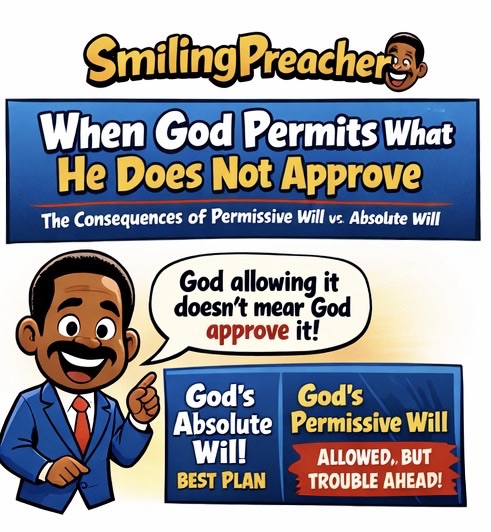
There is a difference between:
God’s Absolute (Perfect) Will – what He desires, designs, and declares as best.
God’s Permissive Will – what He allows, often in response to human insistence, even when it falls short of His best.
The danger is this:
You can have God’s permission… and still suffer consequences.
1. Lot and Zoar – When Fear Chooses Less Than God’s Best

Genesis 19:17–20 (KJV)
“And it came to pass, when they had brought them forth abroad, that he said, Escape for thy life; look not behind thee, neither stay thou in all the plain; escape to the mountain, lest thou be consumed.
And Lot said unto them, Oh, not so, my Lord:
Behold now, thy servant hath found grace in thy sight, and thou hast magnified thy mercy…
Behold now, this city is near to flee unto, and it is a little one: Oh, let me escape thither…”
Exposition
God’s absolute will for Lot was clear:
➡️ “Escape to the mountain.”
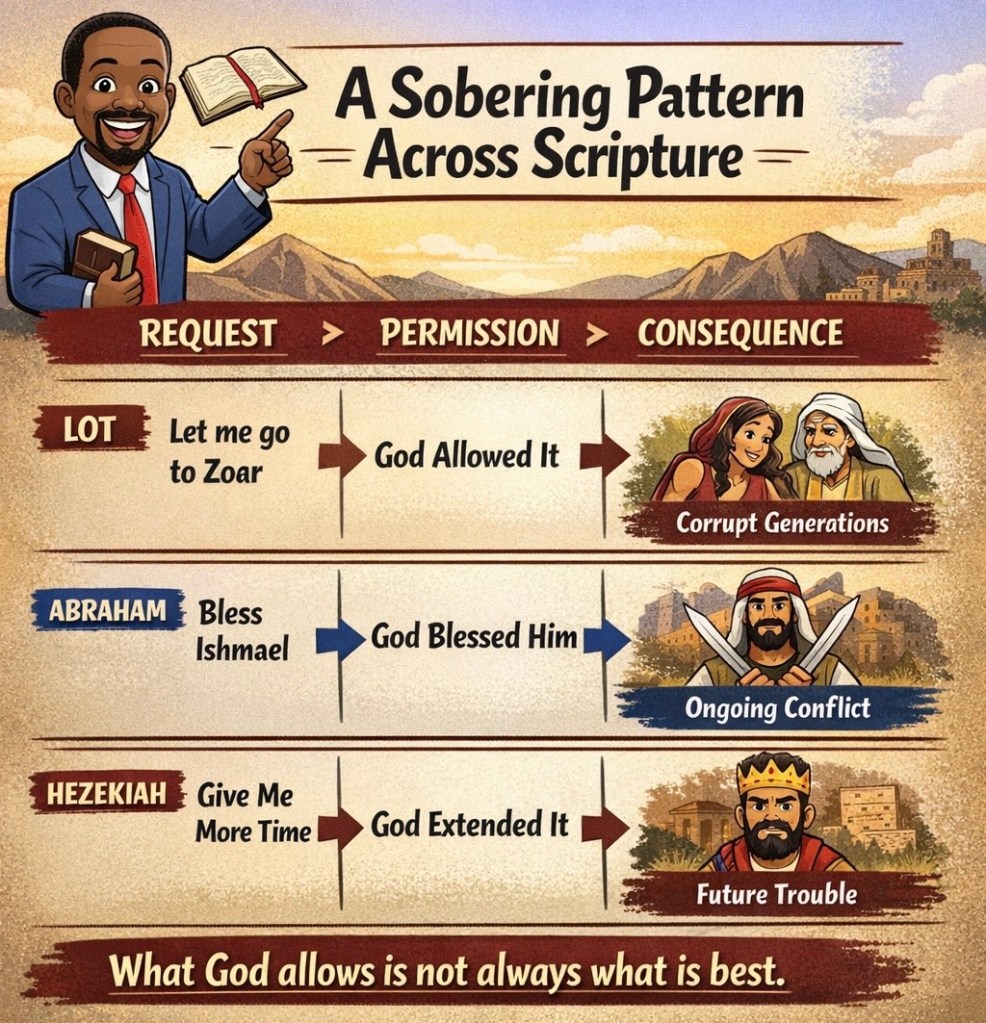
But Lot negotiated. Fear made him choose Zoar—a “little compromise.”
God permitted it.
But what followed?
Lot still ended up in the mountains later (Genesis 19:30) His daughters, influenced by a corrupted mindset, committed incest Moab and Ammon were born—nations that later became persistent enemies of Israel
Insight
Zoar represents partial obedience.
It looks safe… but carries hidden consequences.
👉 When God says “mountain,” anything else—even if permitted—is dangerous.
2. Lot’s Daughters – The Generational Effect of Compromise

Genesis 19:32–36 (KJV)
“Come, let us make our father drink wine, and we will lie with him, that we may preserve seed of our father…
Thus were both the daughters of Lot with child by their father.”
Exposition
This act did not happen in isolation.
It was the fruit of a life lived near Sodom, shaped by:
Compromise
Moral erosion
Wrong environments tolerated too long
God permitted Lot to choose his path earlier (Genesis 13:11), but that permissive path eventually produced generational corruption.
Insight
Permissive will doesn’t end with you—it spills into your lineage.
3. Abraham and Ishmael – When God Grants What He Did Not Promise

Genesis 17:18–20 (KJV)
“And Abraham said unto God, O that Ishmael might live before thee!
And God said, Sarah thy wife shall bear thee a son indeed…
And as for Ishmael, I have heard thee: Behold, I have blessed him…”
Exposition
God’s absolute will:
➡️ Isaac – the child of promise
Abraham’s request:
➡️ “Let Ishmael live before You”
God said:
“No” to Ishmael as covenant carrier “Yes” to blessing him anyway
God permitted Abraham’s desire—but it was not His original plan
Consequences
Ishmael became father of nations outside the covenant Ongoing historical and spiritual conflict between Isaac and Ishmael’s descendants A permanent tension rooted in a permitted alternative
Insight
God may bless what you insist on… but that does not make it His perfect will.
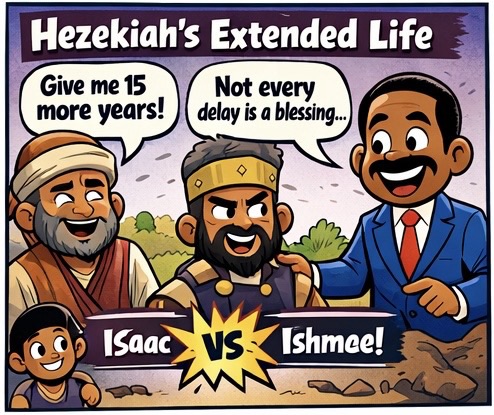
4. Hezekiah – When an Extension Becomes an Interruption
2 Kings 20:1–6 (KJV)
“In those days was Hezekiah sick unto death…
Set thine house in order; for thou shalt die, and not live.
Then he turned his face to the wall, and prayed unto the Lord…
And I will add unto thy days fifteen years…”
Exposition
God’s absolute will at that moment:
➡️ Hezekiah’s life had reached its ordained end
Hezekiah resisted that will through intense prayer.
God permitted an extension.
Consequences of Those Extra 15 Years
Hezekiah later showed Babylon all his treasures (2 Kings 20:12–17) This act triggered prophecy of future captivity His son Manasseh (born during the extended years) became one of Judah’s most wicked kings
Insight
Not every delay of death is a blessing—some extensions introduce future trouble.
5. A Sobering Pattern Across Scripture
6. Theological Insight: Why Does God Permit?
God permits for several reasons:
1. To Honour Human Will
God does not force obedience.
2. To Teach Through Consequences
Some lessons are only learned through outcomes.
3. To Reveal the Superiority of His Perfect Will
After the pain, His original plan becomes clearer.
7. New Testament Alignment
Romans 12:2 (KJV)
“And be not conformed to this world: but be ye transformed… that ye may prove what is that good, and acceptable, and perfect, will of God.”
There are levels:
Good
Acceptable
Perfect
Permissive will often sits in the “acceptable” realm… but God calls us higher.
8. Practical Application for Believers
🔥 1. Stop Negotiating with God
Delayed obedience is often disguised rebellion.
🔥 2. Don’t Mistake Permission for Approval
Open doors are not always divine endorsement.
🔥 3. Value God’s Timing
Even when it is uncomfortable.
🔥 4. Think Generationally
Your decisions today shape tomorrow’s legacy.
Conclusion: Choose the Mountain, Not Zoar

The greatest tragedy in the life of a believer is not outright rebellion…It is settling for what God allowed instead of what He intended.
God’s permissive will may:
Feel easier
Look safer
Seem reasonable
But God’s absolute will:
Is higher
Is harder
Is holy And leads to life without regret
Final Charge
Before you pray your next prayer, ask yourself:
👉 “Am I asking God to change His will… or align me with it?”
Because the safest place in life is not: Where God permits But where God perfectly wills
The Message Bearer, Cornelius Bella

 corneliusbella