Blog culled from the 1977 U.S. Senate Joint Hearing on CIA mind-control research.
Project MK-ULTRA (1953–1973) was a real CIA covert R&D program exploring chemical and biological materials for influencing behavior and interrogation outcomes. The hearings confirm the Agency tested LSD on unwitting U.S. citizens, including in social settings, and directly link at least one death—Dr. Frank Olson—to non-consensual dosing. These acts were later condemned as unethical and legally reckless.
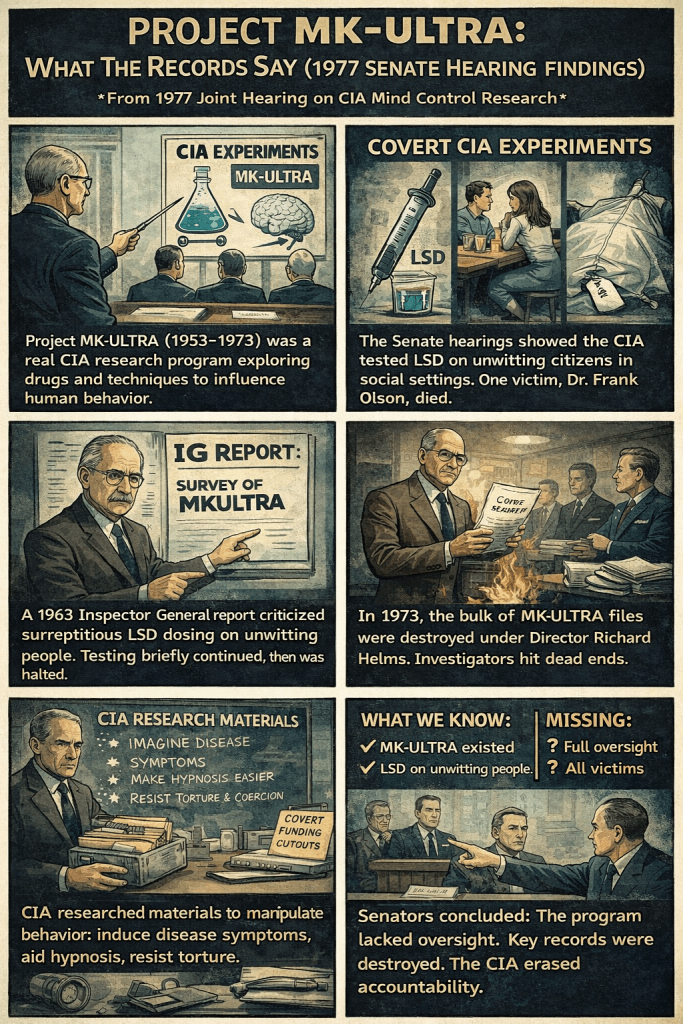
A surviving 1963 CIA Inspector General survey revealed concerns about surreptitious LSD administration, drafted as an “Eyes Only” memo recommending termination. Though testing continued briefly after internal briefings, the subproject was ultimately suspended following IG criticism. The hearing record underscores the rights of individuals were not properly weighed and that dosing lacked proximate medical safeguards.
In 1973, the bulk of MK-ULTRA files were deliberately destroyed under the instruction of CIA Director Richard Helms, later corroborated by senior officials including Dr. Sidney Gottlieb, who routed destruction through TSD personnel via verbal orders. Investigators noted the consequence: no single individual could recall enough details, leaving the historical trail permanently incomplete.
The hearings also reveal the Agency’s research aims included developing materials that could:
Promote illogical thinking and impulsive behavior to publicly discredit targets Enhance mentation and perception Reversibly mimic disease symptoms (malingering) Make hypnosis easier Build resistance to deprivation, torture, or coercion during interrogation
To preserve secrecy, some subprojects used cut-out funding and cover organizations, ensuring partner institutions remained unwitting of CIA participation. One example: a concept to deliver incapacitating agents via dart/pill mechanisms, including a special dart gun once designed to incapacitate a guard dog (Army SOD/Fort Detrick support).
📌 Key Takeaways
What we know (verified):
MK-ULTRA existed and was CIA-run LSD testing occurred on unwitting people At least one fatal outcome is acknowledged The program was internally considered highly sensitive due to ethics, legality, and citizen rights
What we don’t know:
Full subject lists, incident inventories, and complete oversight chains
Why we don’t know:
Deliberate destruction of records Extreme compartmentation and bypassed oversight functions
This is not fiction. It is public record testimony about a classified era of experimentation—with real victims, real gaps, and real lessons about the cost of unchecked secrecy.
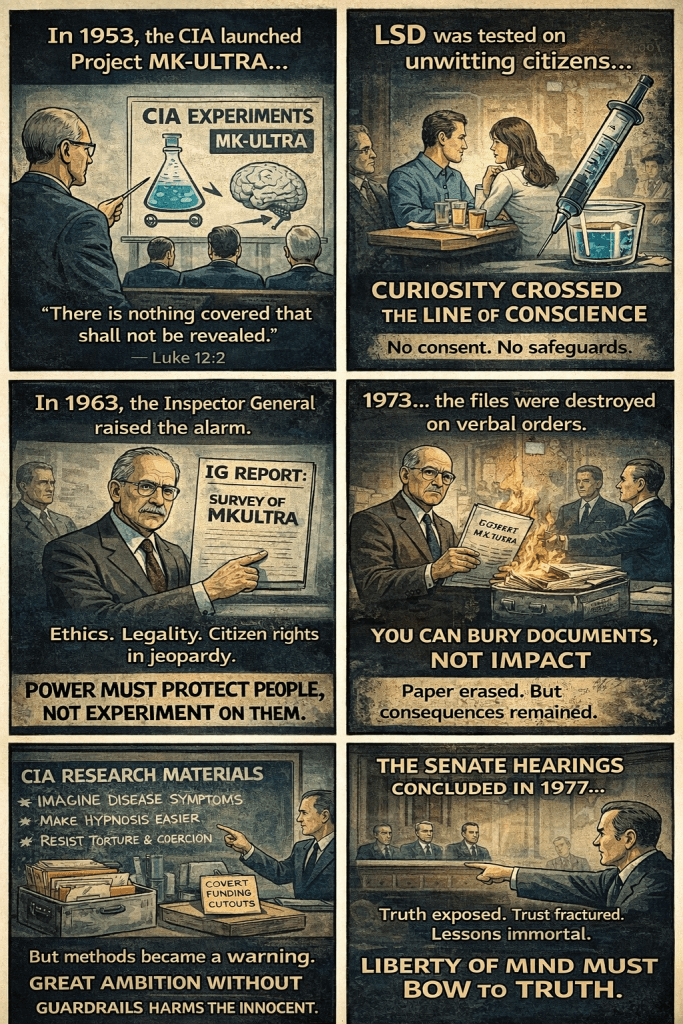
Here are the core lessons we should learn from the 1977 Senate findings on Project MK-ULTRA—practical, historical, and morally anchored:
1. Secrecy without accountability breeds abuse
When systems operate in the dark, the vulnerable suffer. The Senate investigation itself exists because hidden things eventually demand exposure and oversight. This reminds us that power must never be unchecked.
2. Human dignity is sacred and must be protected
The findings show real people were treated as test material, not image-bearers of God. For us today, the lesson is clear:
No goal—scientific, political, or strategic—justifies violating human worth, consent, or safety.
3. Ethics must lead innovation, not trail behind it
The project advanced research but abandoned moral safeguards. Progress that ignores conscience is not advancement—it is danger wearing the mask of discovery.
4. Destroying records does not erase consequences
Though many files were destroyed, the damage remained—broken trust, unanswered questions, lost lives, and public outrage.
Truth may be buried, but it does not die. Impact outlives paperwork.
5. Discernment matters more than sensational narratives
Because the historical trail is incomplete, conspiracy theories flourished around it. The Christian posture (and a wise human posture) is this:
Do not build conclusions on gaps—build them on verified witnesses and truth.
6. Compassion should rise for victims of unseen battles
While the project has no scriptural mandate, Scripture teaches us to remember the oppressed, pray for the bruised, and stand for liberty of mind and spirit (Luke 4:18, 2 Cor 10:5 conceptually).
So the right response is not fascination, but intercession and empathy for people held in any kind of captivity—mental, emotional, or spiritual.
7. Institutions must learn to say: “We were wrong,” early enough
The hearings were a national confession that intelligence work crossed the line. The lesson to every generation is:
Admit poor judgment, correct it, and rebuild trust intentionally.
The Message Bearer (SmilingPreacher), Cornelius Bella

 corneliusbella